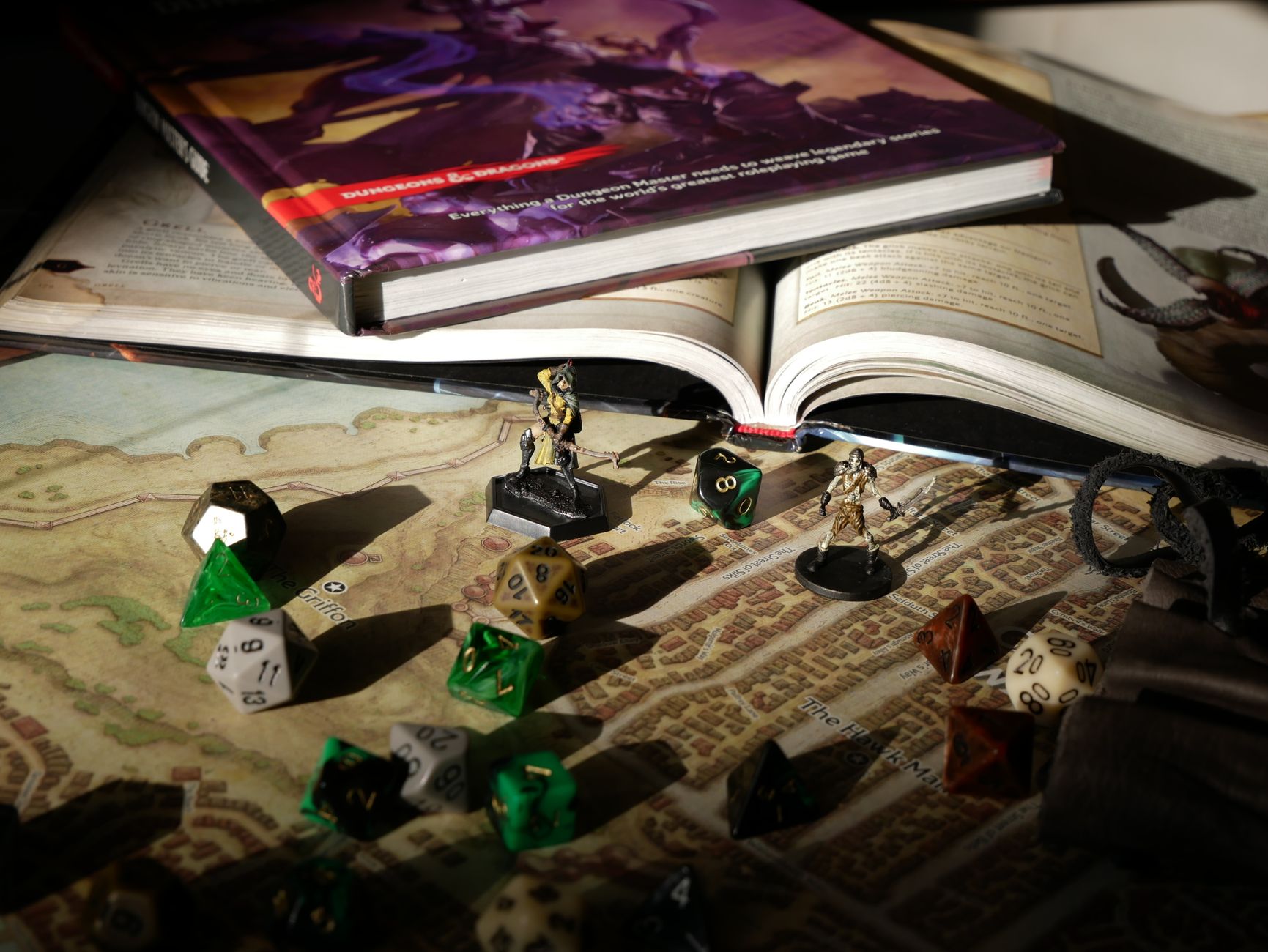
OSR gets thrown around a lot in tabletop circles, but it stands for something specific: the Old-School Renaissance, a movement of designers and publishers making games that return to the rules-light, high-lethality style of tabletop roleplaying’s earliest editions. It’s been a quiet, prolific corner of the hobby for over a decade — and in the last couple of years, one game from that scene, Shadowdark, has broken into the mainstream in a way few OSR titles ever have. Here’s what the movement is about, and why Shadowdark in particular caught on.
What OSR actually means
The Old-School Renaissance grew out of players and designers revisiting early editions of Dungeons & Dragons — and the many retroclones built to replicate them — after decades of rules had made mainstream fantasy RPGs increasingly detailed and combat-tactical. OSR games generally share a few traits: character creation that takes minutes rather than hours, low starting hit points that make early-level death a real possibility, and a philosophy that clever play at the table should matter more than a character sheet full of options. Rulings over rules is the unofficial motto — GMs are expected to adjudicate unusual situations on the fly rather than look up a subsystem for every action.
OSR design vs. modern crunchy systems
Modern systems, including current-edition D&D and many of its competitors, have trended toward giving players lots of discrete mechanical choices — feats, subclasses, long ability lists — so that character build is itself a form of expression. That’s not a flaw; it’s a different goal. OSR design deliberately trades that away. Fewer character options mean faster prep and faster resolution at the table, but they also mean more of the game’s texture comes from exploration, resource management like light, food, and encumbrance, and the players’ own problem-solving rather than character sheet abilities. Combat in particular tends to be treated as dangerous and worth avoiding, not a balanced set-piece the system guarantees the party can win.
Why Shadowdark specifically took off
Plenty of OSR games existed before Shadowdark, so the design philosophy alone doesn’t explain its breakout success. What Shadowdark did differently was pair classic OSR sensibilities with modern production values and modern table conveniences. It uses clean, contemporary layout instead of the photocopied-zine aesthetic common to a lot of OSR material, and its rules are genuinely easy to teach to players coming from D&D 5th Edition, since ability scores, classes, and levels will all look familiar. Its signature real-time torchlight mechanic — light sources burn down on an actual game timer — is a small rule that does a lot of work reinforcing OSR’s core tension without adding bookkeeping overhead.
The game also launched with a strong crowdfunding run and continued publisher support from The Arcane Library, which kept new adventures and material flowing instead of leaving the core book to stand alone — a pattern that’s helped it build the kind of ongoing community momentum bigger, more established systems usually enjoy. You can read the core rules and design notes on the official Shadowdark page.
Who OSR-style games are for
OSR games, Shadowdark included, tend to suit groups who want sessions that move fast, who enjoy the tension of characters that can actually die, and who’d rather solve a problem by describing a clever plan than by checking a feat list. They’re a poor fit for players who love deep character-build customization or who want combat balanced so the party is expected to win. Neither approach is objectively better — but Shadowdark’s rise shows there’s a large, currently underserved audience of players who grew up on modern D&D and are discovering, for the first time, what its rules-lighter ancestors felt like to play.
Photo by Stephen Hardy on Pexels



Leave a Reply