
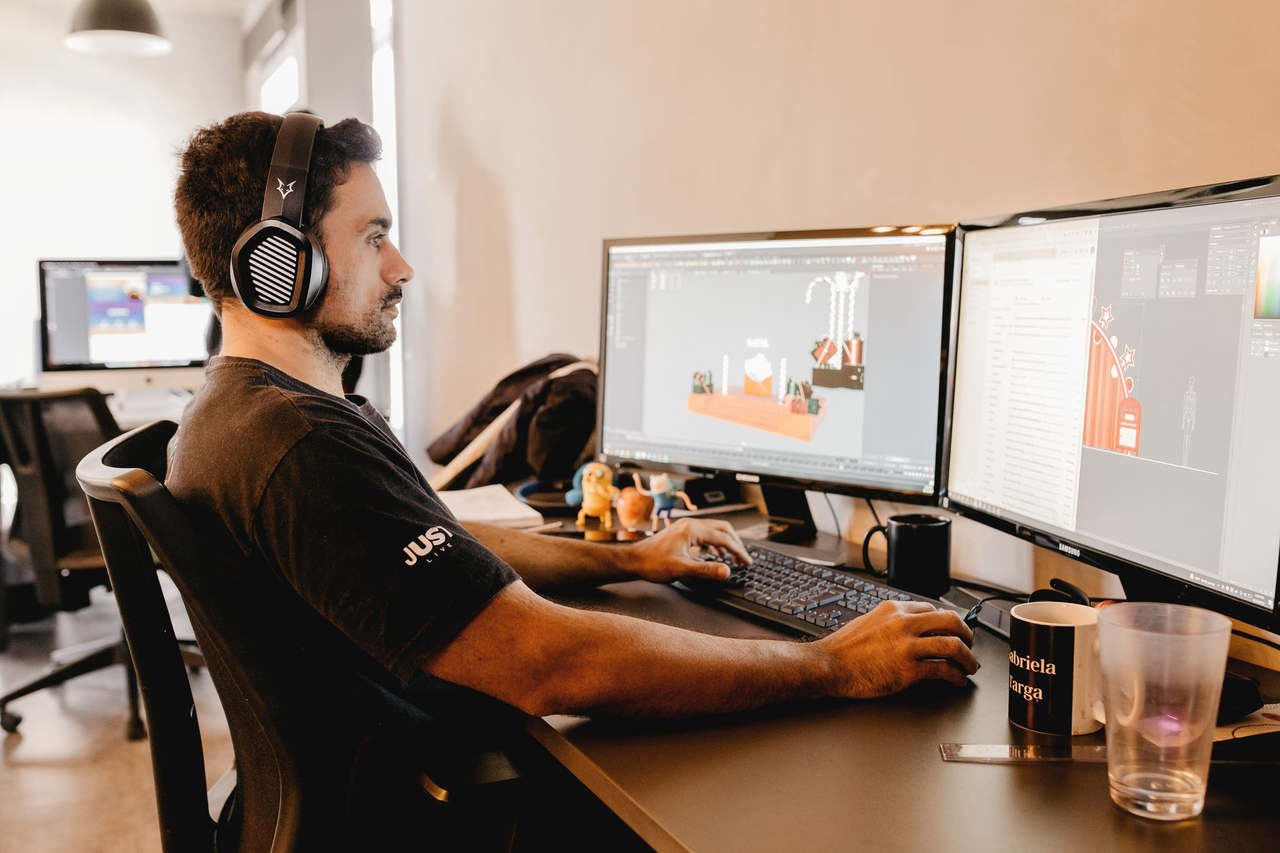
The gaming sector stands at a crossroads. AI-powered creation platforms have demolished barriers that once kept talented storytellers out of game development. Solo creators now ship titles that rival studio productions. Teams of three build worlds that would have required dozens of specialists just years ago.
This transformation arrives with complexity. The same tools that democratize creation also threaten to flood marketplaces with derivative content. Aspiring developers face a paradox: entry has never been easier, yet standing out grows increasingly difficult.
The Current Landscape of AI Game Development Tools
Machine learning systems now handle tasks that consumed entire development cycles. Procedural generation algorithms craft entire ecosystems. Natural language processors convert written descriptions into playable prototypes within hours. Asset creation tools generate characters, environments, and animations from simple text prompts.
Major engines like Unreal and Unity have embedded AI assistants directly into their workflows. These systems suggest optimizations, identify bugs before they ship, and even predict player behavior patterns. Smaller studios leverage cloud-based platforms that offer sophisticated capabilities without requiring massive infrastructure investments.
The financial implications shake the industry. Production budgets shrink dramatically when automation handles repetitive tasks. A recent Forbes analysis suggests that mid-tier studios cut development costs by substantial margins while maintaining quality standards. Independent developers access tools previously reserved for companies with significant capital.
Unprecedented Opportunities for New Developers
Programming knowledge no longer serves as the absolute gatekeeper. Visual scripting systems powered by machine learning allow designers to build complex game logic through intuitive interfaces. Writers craft interactive narratives without touching code. Artists focus on creative direction while algorithms handle technical implementation.
Asset creation represents perhaps the most dramatic shift. Developers describe desired characters, weapons, or environments in plain language. Generative models produce multiple variations within minutes. This capability particularly benefits creators from regions where access to traditional art training or expensive software remained limited.
Rapid Prototyping and Iteration
Testing game concepts no longer requires months of groundwork. AI systems build playable prototypes from design documents. Developers iterate on mechanics, receive automated feedback on balance issues, and refine experiences before committing significant resources. This speed enables experimental projects that traditional funding models would never support.
Market research benefits similarly. Predictive analytics forecast player engagement based on genre conventions and current trends. Developers make informed decisions about which features merit investment. Risk assessment improves dramatically when data-driven insights supplement creative intuition.
Personalized Gaming Experiences
Adaptive AI systems tailor content to individual players. Difficulty curves adjust in real-time. Narrative branches respond to playing styles rather than binary choices. Non-player characters develop personalities that evolve through interaction. Small teams create experiences that feel handcrafted for each person who plays.
This personalization extends beyond gameplay. Marketing algorithms identify niche audiences that traditional advertising would miss. Community management tools powered by natural language processing help solo developers maintain relationships with growing player bases. The entire lifecycle from concept to community becomes manageable for smaller operations.
Significant Risks and Challenges
The accessibility that empowers creators also enables low-effort exploitation. Marketplaces overflow with algorithmically-generated titles that prioritize quantity over quality. Players grow skeptical of unfamiliar developers, making genuine independent projects harder to surface. Trust erodes across the ecosystem.
Homogenization threatens creative diversity. When everyone uses similar training data and generation models, outputs converge toward aesthetic and mechanical uniformity. Games begin resembling each other despite coming from different creators. The very tools meant to enable unique visions paradoxically encourage derivative work.
Intellectual Property Concerns
Legal frameworks struggle to keep pace with generative technology. Questions about ownership multiply when AI systems train on existing works. Developers face uncertainty about whether their AI-assisted creations might inadvertently violate copyright. Litigation risks loom over the entire field, particularly for creators without legal resources.
Platform holders establish conflicting policies. Some marketplaces welcome AI-generated content with minimal restrictions. Others implement strict disclosure requirements or outright bans on certain automated processes. Navigating this fragmented regulatory landscape demands constant vigilance and adaptation.
Skills Obsolescence and Career Concerns
Traditional specializations face existential questions. Artists who spent years mastering specific techniques watch algorithms replicate their work in seconds. Programmers wonder whether their expertise retains value when natural language interfaces handle common tasks. The Bureau of Labor Statistics tracks shifting demand across creative and technical roles as automation advances.

Job markets transform rather than simply contract. Demand grows for professionals who bridge creative vision and technical capability. Developers who understand both storytelling and system design command premium positions. Pure execution skills diminish in value while strategic thinking and unique perspectives become irreplaceable.
Essential Skills for Thriving in an AI-Augmented Industry
Technical literacy remains valuable even as direct coding becomes optional. Developers who understand how algorithms make decisions craft better prompts and recognize system limitations. This knowledge prevents over-reliance on automation and enables strategic choices about when to intervene manually.
Creative direction emerges as the critical differentiator. Tools might generate assets, but human judgment determines which outputs serve the vision. Developers must cultivate taste, develop distinctive aesthetic sensibilities, and maintain clear artistic intent throughout production. Machines excel at execution; people provide purpose.
Systems Thinking and Game Design Fundamentals
Understanding player psychology, engagement loops, and reward structures cannot be automated. Developers who grasp these principles create experiences that resonate regardless of their production method. Strong game design thinking transforms AI-generated components into cohesive, meaningful interactions rather than random assemblages of mechanics.
Testing and refinement grow more crucial when production accelerates. Fast iteration means nothing without careful evaluation. Developers must recognize what works, identify subtle problems, and make targeted improvements. This analytical capability separates compelling games from technically functional disappointments.
Ethical Considerations and Transparency
Players increasingly demand disclosure about development processes. Developers who communicate openly about their AI usage build trust and differentiate themselves from content mills. Transparency becomes a competitive advantage rather than a liability when approached thoughtfully.
The Federal Trade Commission and international regulators scrutinize automated content creation. Staying informed about evolving guidelines protects against future complications. Developers who adopt ethical practices early position themselves favorably as standards solidify.
Strategic Approaches for Aspiring Developers
Successful creators treat AI as amplification rather than replacement. They identify which aspects of their vision benefit from automation and which require personal touch. Character dialogue might leverage language models while core narrative beats remain hand-crafted. Environmental assets could be AI-generated while key locations receive manual attention.
Building hybrid workflows maximizes both efficiency and distinctiveness. Developers establish clear artistic guidelines before engaging automated tools. They curate and refine generated outputs rather than accepting first results. This approach combines speed with intentionality, producing work that feels both polished and personal.
Community and Collaboration
Isolation represents a major pitfall in accessible development. Solo creators benefit enormously from peer feedback, skill sharing, and collaborative problem-solving. Online communities, local meetups, and development collectives provide support networks that make sustainable careers possible.
Cross-discipline partnerships multiply capabilities without requiring individual mastery of every skill. A writer might team with someone strong in systems design. An artist could collaborate with a developer focused on player experience. These combinations produce richer games than any single person working alone, even with powerful tools.
Looking Forward: The Next Evolution
Current capabilities merely hint at coming developments. Research teams work on AI directors that adjust pacing and tone throughout entire campaigns. Procedural storytelling systems generate narratives with the coherence of authored scripts. Voice synthesis and animation tools approach the point where full performances emerge from text descriptions.
The democratization trend will likely accelerate. More sophisticated tools become available to broader audiences. Barriers continue falling while competition intensifies. Developers who establish strong creative voices and genuine connections with audiences position themselves to thrive regardless of technical disruption.
Education systems struggle to adapt. Traditional programs emphasize skills that automation increasingly handles. Forward-thinking institutions shift focus toward design thinking, critical analysis, and interdisciplinary synthesis. Aspiring developers might find more value in philosophy, psychology, and literature courses than purely technical training.
The industry stands at a remarkable moment. Technology has eliminated many obstacles that prevented talented people from creating games. Yet that same technology introduces new challenges around differentiation, ethics, and career sustainability. Success belongs to developers who embrace tools without losing sight of what makes experiences meaningful. The machines handle execution admirably. Human vision, judgment, and creativity remain irreplaceable.
Aspiring developers face daunting but exciting prospects. The path requires adaptability, continuous learning, and willingness to experiment. Those who develop strong fundamentals, maintain clear creative vision, and engage authentically with audiences will find opportunities abundant. The barriers have fallen. What creators build with this access will define gaming for years to come.





Leave a Reply