

Hasbro closed out fiscal year 2025 by telling investors it had “advanced its evolution to a digital-first play and IP company,” language that showed up again in the company’s Q1 2026 results as Wizards of the Coast kept posting standout numbers. It’s not a slogan — it’s a description of where the money is actually coming from, and it’s worth taking seriously as a signal of where Dungeons & Dragons and Magic: The Gathering are headed. For players who care about tabletop gaming as a physical, offline, book-on-the-table hobby, that direction should be genuinely concerning.
The Numbers Behind the Pivot
The shift isn’t subtle once you look at the segment reporting. Hasbro’s Wizards of the Coast and Digital Gaming division posted record 45% growth for full-year 2025, and the company’s own Q4 and full-year 2025 results credit digital products as a primary driver. Meanwhile, physical tabletop sales have been going the other direction: trade press outlet ICv2 reported that tabletop gaming sales in the Wizards of the Coast segment fell 3% in 2024, down to $1.04 billion from $1.07 billion the year before. Digital margins are simply better business: when D&D Beyond sells a digital rulebook, there’s no printing cost, no distributor cut, and no retailer margin to share. In 2024, CEO Chris Cocks told investors that digital revenue on D&D Beyond already accounted for “over half” of D&D’s profit.
What “Digital-First” Has Already Meant in Practice
This isn’t a hypothetical future shift — it’s already reshaped how D&D books reach players. Since 2023, Wizards has required every new physical D&D book to be bundled with a digital code for D&D Beyond, effectively ending physical-only purchases; outlets like Bell of Lost Souls covered the change when it landed. More recently, the company’s 2026 “D&D Seasons” roadmap frames the year’s content around thematic digital release windows rather than a traditional book-by-book publishing schedule — a structure much closer to a video game’s live-service content calendar than to how tabletop RPGs have historically shipped.
Why This Should Worry Physical-Media Players
The core problem isn’t that digital tools are bad — a well-built digital character sheet or compendium is genuinely useful at the table. The problem is what happens to player ownership once digital becomes the primary product instead of a companion to it. A physical rulebook works the same way on the shelf ten years from now as it did the day you bought it. A digital entitlement lives inside a platform the publisher controls, and players in community discussions have pointed to exactly this risk, citing past cases where access to purchased digital content was revoked when a platform license changed hands. Physical media doesn’t have that failure mode. A book you own is a book you own, full stop — no account, no login, no platform that can vanish or change its terms.
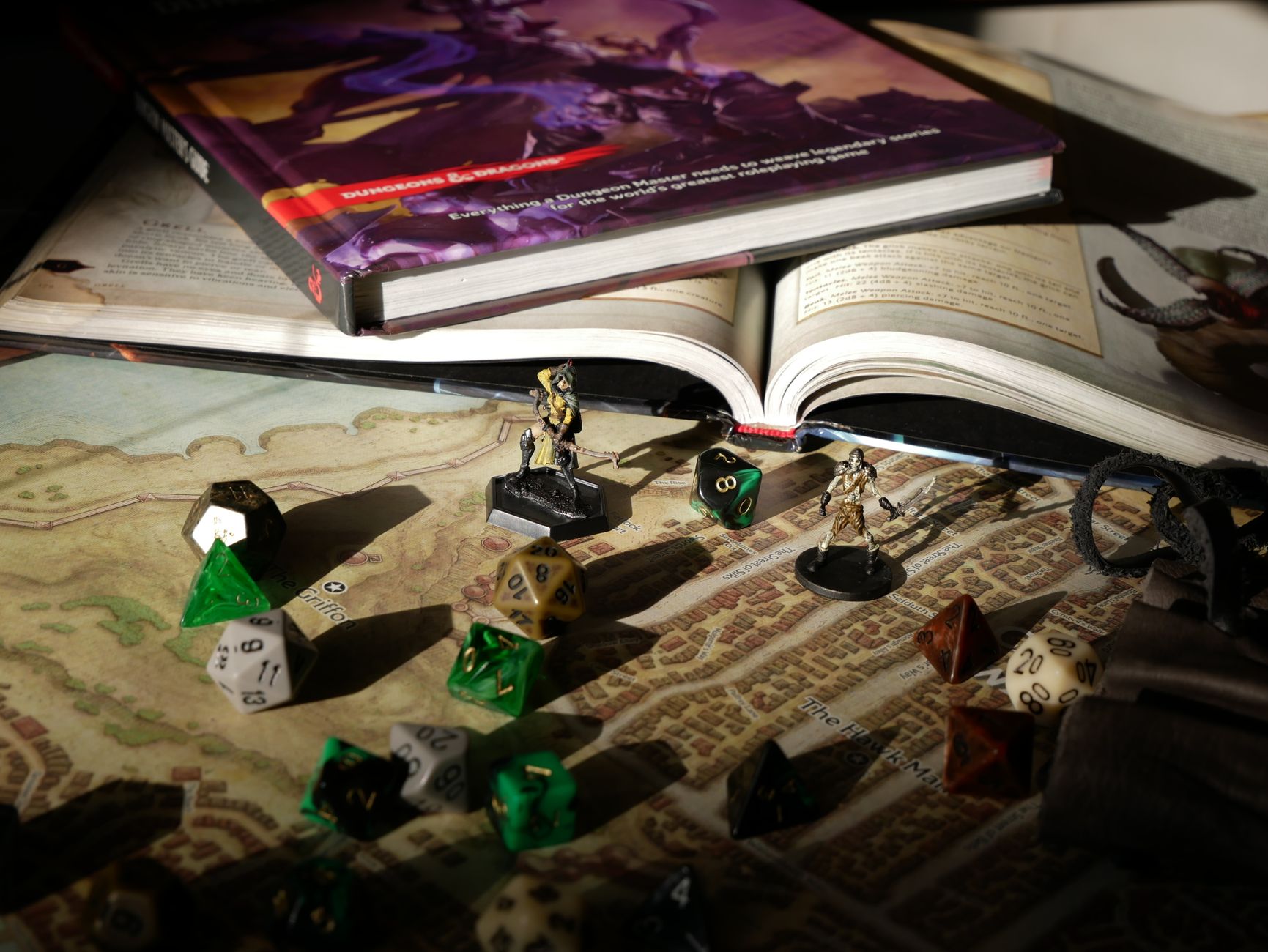
There’s also a slower, cultural cost. Part of what makes tabletop RPGs different from video games is the physical clutter of the hobby — dog-eared rulebooks, dice-stained battle mats, handouts passed across a table. A publisher optimizing for digital margins has less commercial reason to invest in that physical experience, even if it never explicitly discontinues print. Reduced organized-play print runs are already a small, concrete example: Wizards’ own Wizards Play Network guidance caps some regional organized-play kits at a limited number of physical copies, with digital materials filling the gap.
The Fair Counterpoint
To be clear, Wizards hasn’t announced it’s ending physical books, and it would be inaccurate to claim otherwise — new D&D releases are still printed and still sold in stores, and the company’s own publishing-partner program guarantees both physical and digital releases for officially licensed third-party content. Magic: The Gathering, meanwhile, just posted its strongest year ever in 2025, driven partly by physical product lines like Secret Lair. This is a shift in priority and investment, not an announced abandonment.
Why It Still Matters
But priority is exactly the point. When digital is the “primary” version of a product and physical is secondary, physical is where corners eventually get cut first when a business needs to protect margins — smaller print runs, fewer standalone physical releases, more content that’s digital-only by design rather than by necessity. For a hobby built for centuries around sitting at a table with a book and some dice, that’s a direction worth pushing back on, not quietly accepting because the shareholder numbers look good.
Photo by Craig Adderley on Pexels



Leave a Reply